A Virtual Private Network (VPN) is a technology that creates a secure and encrypted connection over a less secure network, such as the Internet. It allows users to send and receive data as if they were connected to a private network, ensuring confidentiality, integrity, and authentication.
🔒 How Does VPN Tunneling Work? 🌐
Let’s dive into the step-by-step process of how a VPN ensures secure and private communication over the internet:
User Initiates a Request: The process begins when a user takes an action, such as browsing a website or accessing an app. This request originates from their device.
Request Encryption: The VPN software installed on the user’s device encrypts the request using a secure encryption protocol (like OpenVPN, IPsec, or WireGuard). This ensures the data is unreadable to anyone intercepting it.
Data Travels Through the VPN Tunnel: The encrypted data is then transmitted securely over the internet through the VPN tunnel, safeguarding it from threats during transit.
Server Decrypts the Data: The VPN server decrypts the incoming data and forwards the user’s request to the target destination (e.g., a web server).
Web Server Processes the Request: The web server receives the request, processes it, and prepares a response (e.g., delivering a webpage or data).
Response Encryption: The VPN server encrypts the response from the web server and sends it back through the secure VPN tunnel.
Delivery: The user’s VPN client decrypts the data, displaying the secure and private result on their device
This infographic breaks down the process, step by step, showing how data remains secure and private during transit. A VPN tunnel encrypts your data, ensuring that even if intercepted, it stays protected from unauthorized access.
Here are some key points:
✅ A VPN creates a secure pathway between your device and a server. ✅ Encryption protocols like OpenVPN, IPsec, and WireGuard safeguard your data. ✅ The process ensures privacy while you browse, stream, or work online.
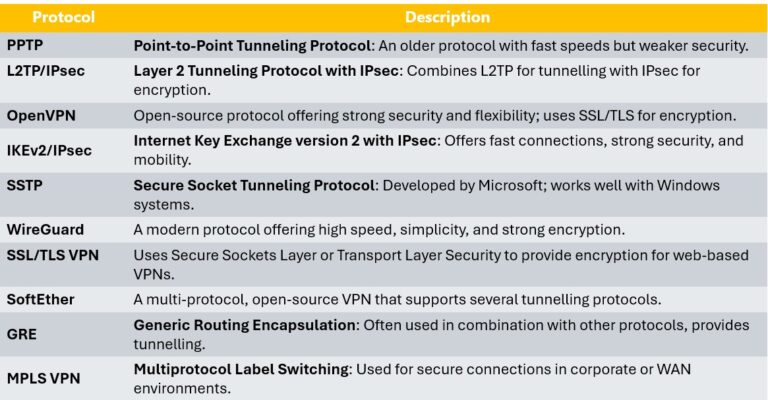
Choosing the Right Protocol
For Speed: WireGuard or PPTP (if security isn’t a primary concern).
For Security: OpenVPN, IKEv2/IPsec, or WireGuard.
For Compatibility: SSTP (on Windows) or L2TP/IPsec (for older systems).
For Corporate Use: MPLS VPN or IPsec.
The choice of protocol depends on the specific needs of performance, security, and compatibility.
Like this:
LikeLoading...
Privacy & Cookies: This site uses cookies. By continuing to use this website, you agree to their use. To find out more, including how to control cookies, see here: Cookie Policy.